Tariff Codes Are Not “Set and Forget”
Your Shopify Catalog Changes. Your Compliance Should Too.
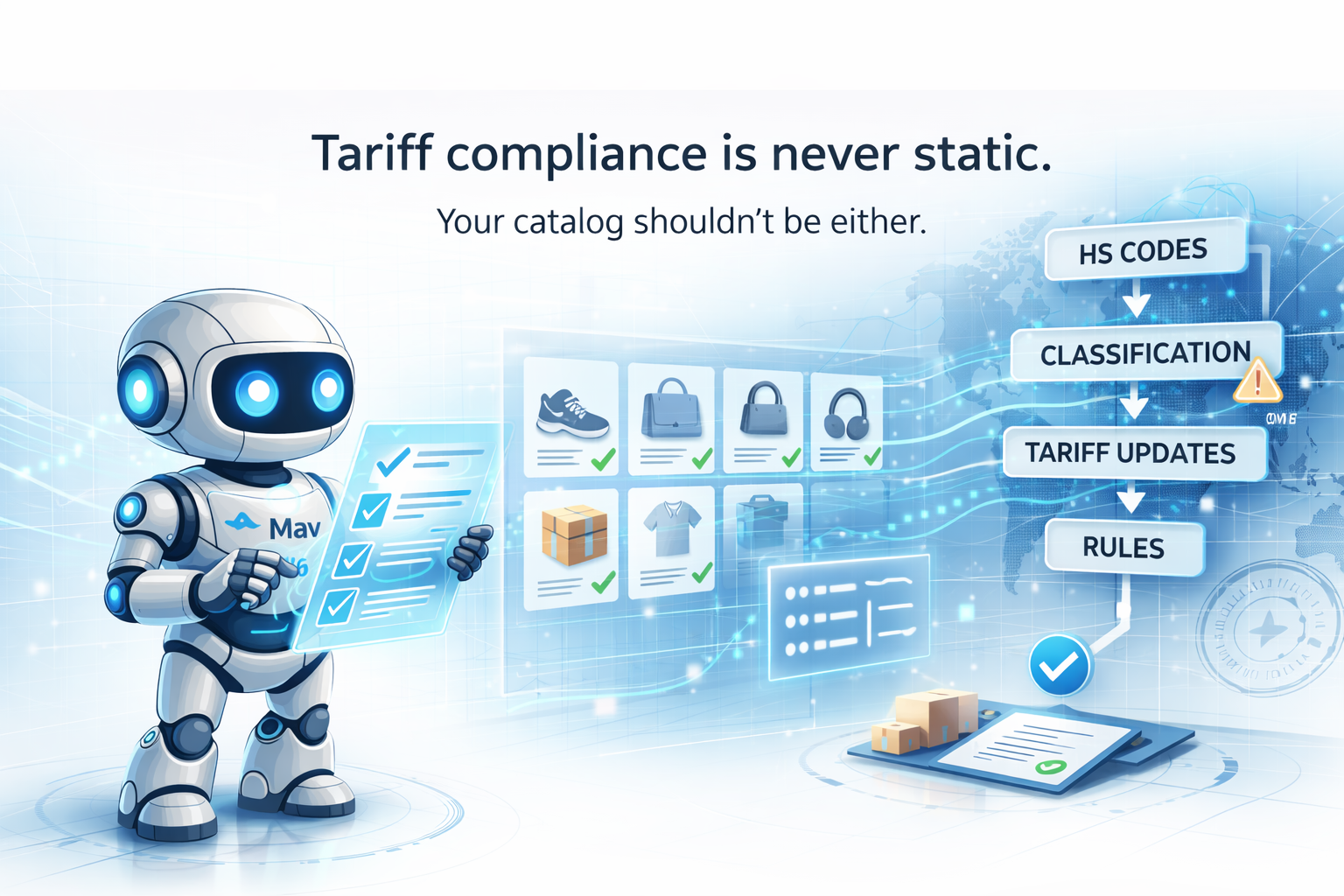
If you sell internationally, tariff codes are not optional.
They determine duties.
They determine customs clearance.
They determine whether your shipment glides through inspection or gets flagged for review.
And yet, most Shopify merchants treat tariff codes like a one-time setup task.
That’s the mistake.
The Reality: Your Catalog Is a Living System
You already know this.
You:
- Add new SKUs
- Modify product descriptions
- Introduce bundles
- Change materials
- Launch seasonal variations
- Expand internationally
Every one of those changes can impact classification under the Harmonized System (HS).
But your tariff codes?
They’re sitting in a spreadsheet. Or buried in a metafield. Or copied forward from “whatever worked last time.”
That gap is where compliance risk accumulates.
Generate tariff code proposals directly alongside your Shopify catalog — not in a spreadsheet.
The Free plan includes three proposals to get started.
Why “Mostly Right” Isn’t Good Enough
Tariff classification is not guesswork. It’s rule-based interpretation under the Harmonized System, administered globally and implemented locally (e.g., HTS in the U.S.).
When classification is wrong:
- Duties are miscalculated
- Customs brokers ask questions
- Shipments are delayed
- You get flagged for audit
And worse: you don’t know which SKUs are defensible.
If someone asked today:
“Why did you choose this code?”
Could you produce:
- Competing alternatives?
- Structured reasoning?
- An approval trail?
Most merchants cannot.
That’s not a tooling problem.
That’s a process problem.
The Structural Problem With Spreadsheets
Spreadsheets assume:
- Static data
- Manual review
- Human memory
But your Shopify catalog is dynamic. It’s API-driven. It’s constantly mutating.
Compliance that lives outside your system of record will drift.
You don’t need another spreadsheet.
You need tariff classification embedded directly alongside your products.
What Modern Compliance Looks Like
Inside Shopify, you should be able to:
- Generate a defensible tariff code proposal for any product
- See rejected alternatives
- Review structured reasoning
- Approve with an audit trail
- Apply the code back to the product
- Download a compliance packet
And do it in minutes — not hours.
Compliance should be:
- Repeatable
- Auditable
- Attached to your catalog
- Regenerable when products change
Not a one-time export exercise.
The Coffee Test
Here’s the bar:
If you can generate, review, and approve tariff codes in the time it takes to make a cup of coffee — you will actually keep them up to date.
If it takes a consultant, a spreadsheet, and a week of back-and-forth — you won’t.
That’s human behavior. Not a moral failing.
Try it inside Shopify.
Install Tariff Code Compliance and generate your first proposal in minutes.
The Hidden Risk: Catalog Drift
Let’s say you:
- Add a new material
- Change a product description
- Launch a variant with a different composition
- Expand to Mexico
- Begin shipping DDP instead of DAP
Did your tariff code change?
Maybe.
Did anyone check?
Probably not.
That’s the real risk: drift between what you sell and how it’s classified.
Tariff Codes Are Not a One-Time Setup
They are part of operational infrastructure.
Just like:
- Inventory
- Pricing
- Fulfillment
- Tax
- Payments
If it’s part of your cross-border revenue engine, it deserves system-level treatment.
A Better Model
Instead of:
“We set codes once.”
Move to:
“We generate and approve codes alongside our catalog.”
Instead of:
“We think these are right.”
Move to:
“We have an audit trail.”
Instead of:
“Customs flagged us.”
Move to:
“We can show our reasoning.”
That shift — from guesswork to defensibility — is what separates reactive merchants from operationally mature ones.
Where This Fits
If you’re:
- Expanding internationally
- Shipping DDP
- Scaling SKU count
- Getting customs questions
- Or just tired of not knowing whether your codes are correct
Then tariff compliance is not a future problem.
It’s a now problem.
And it should live inside your Shopify workflow — not outside of it.
Start With Three Proposals
You don’t need to overhaul your entire catalog.
Start small.
Install Tariff Code Compliance inside Shopify and generate three tariff code proposals for free.
Review the reasoning.
Approve one.
Download the compliance packet.
See what defensible classification looks like in practice.